Thursday, 17 January 2013

Week 5_Task 1_News & I II


Write a short essay of about 400 words about the below stated issue: news and you, again. Who owns the newspapers and TV stations in your country? Do you think this has an effect on the news that you hear?

Malaysia have 6 main free TV channels, which are TV1, TV2, TV3, NTV7, 8TV and Channel 9. Somehow, TV1 and TV2 are owned by government. Both channels is outdated and old style. Effort is made to change the image of both station but unfortunately failed. So, both channels have less audience. While NTV7, TV3, 8TV and Channel 9 are under same corporation. All of them is more updated and have a bigger audience group.

Censorship is applied to control media content to avoid unnecessary disturbance to the “national” security. The regulated freedom of the press has been criticized. Although critics concede that journalists "probably won’t be hauled off and shot" for being critical of the government, it has been claimed that the government creates a chilling effect through threats of reduced employment opportunities and refusing journalists' family members "a place at one of the better public universities". Legislation such as the Printing Presses and Publications Act have also been cited as curtailing freedom of expression.

Technology has made the media the most important immediate influence on opinions and understanding in the industrialized world and has significantly heightened media impact in the developing countries as well. Media has a powerful capacity to encourage global awareness thereby promoting cross-cultural understanding, tolerance and acceptance of ethnic, cultural, religious and gender differences in communities across the globe. Unfortunately, the media’s potential to be a force for good can easily backfire. By disseminating messages that create and reinforce negative stereotypes and perpetuate misconceptions, the media frustrates dialogue and works against mutual understanding.


Thursday, 3 January 2013

Week 4_Task 1_News & I

Write a short essay of about 400 words about the below stated issue: news and you. How often do you read the paper or watch the news on TV? How important is it for you to keep up with current events?

  News is a form of communication which informs us the current events. News may refer as message which provides the information and the details of an incident. It will value the fact and inform us what are happening around the world. News is very important because it helps us to get in touch with the world around us. Without knowing any news, we do not know what is happening in our country which lack of information and knowledge.

  Obviously, the news on internet can’t be 100% trusted, either newspaper or tv news. Somehow, newspaper and TV news are more trustful since it’s more official. Online news might be edited, twisted and added with fake information. As a reader, I always remind myself to be a smart audience. In conclusion, I truly think that I am selfish and lacking of updated knowledge but its better not to approach them and make myself down. 

  Although there are the advancement of technology which allow us to watch the news online and also read the newspaper online, I still prefer to read the actual newspaper. This is due to the habitual of the composition of typesetting. Maybe the other language newspaper done a good job with their website and online news sharing, but the Chinese newspaper company still not so flexible. Hard to find the latest news of the day and also the whole news of the day on the website. Now, they even cut off half of the news that are visible to public because of the sales of actual newspaper are decreasing and less people buying it. The online news can be read only very simple with no much details now. And the news shared on Facebook are mostly concern about the government and celebrity which not really caught my attention.

  The times of reading newspaper and watching news on TV is getting lesser and lesser and even no at all. But, luckily, when there is holidays and I get to back home, I still will read the newspaper but less to watch it on TV. Keep up with the current events is quite important for every people and also students. This is because it is the basic knowledge and also direction of the world. We need to know what is happening in the world and especially in our own country so that we are on the track with the progress of all level. Keep track with current event also essentially important to us, the design student so that we know the direction of trends flow and what is attract people now.


Week 3_Task 1_Subject Matter & Theatre


Write a short essay of about 400 words on the ‘subject-matter’ below stated.
What is theatre? How do you think theatre, as a media form, communicates messages to its audience?


  According to Wikipedia, theatre is a collaborative form of fine art that uses live performers to present the experience of a real or imagined event before a live audience in a specific place. The performers may communicate this experience to the audience through combinations of gesture, speech, song, music or dance. Elements of design and stagecraft are used to enhance the physicality, presence and immediacy of the experience. Theatre today includes performances of plays and musicals. Although it can be defined broadly to include opera and ballet, those art forms are outside the scope of this article.

  Theatre is a type of media form which can bring messages to the audience. There is more effective if we use theatre as a media form because it just like a story telling for people to recall the facts or the story. The writer has to be creative and think of ways to set an emotion into each character which can be felt by the audience such as comedy, romance, mystery and so on. Besides, they need to think on the type of audience would be aiming at and have to keep in mind of their target audience. According to Wikipedia once again, theatre has involves the audiences in variety of ways. Audiences have been engaged differently, often as active participants in the action on a highly practical level. Audience participation can range from asking for volunteers to go onstage. By using audience participation, the performer invites the audience to feel a certain way and by doing so they may change their attitudes, values and beliefs in regard to the performance's topic.

Thursday, 8 November 2012

Week 2_Task 1_ The 10 Media Forms

1. Primitive Media


Written media is defined as any words, events, message or thoughts written or recorded on a surface. Writing needs to be more explicit, since obscurities and misunderstandings cannot be removed immediately. People feel more committed to what they write because of the potential permanence of the written communication. Self-correction is eliminated through editing in writing. 


2. Film Media


'Film' encompasses motion pictures as individual projects, as well as the field in general. The name comes from the photographic film also called filmstock, historically the primary medium for recording and displaying motion pictures. Many other terms exist—motion pictures or just pictures, the silver screen, photo-plays  the cinema, picture shows, flicks—and commonly movies.


3. Digital Media


Digitized content in the form of text, graphics, audio, and video. It has to be able to transmitted over internet or computer network


4. Printed Media


Print media is one of the oldest and basic forms of mass communication. It includes newspapers, weeklies, magazines, monthlies and other forms of printed journals.The contribution of print media in providing information and transfer of knowledge is remarkable. Even after the advent of electronic media, the print media has not lost its charm or relevance. Print media has the advantage of making a longer impact on the minds of the reader, with more in-depth reporting and analysis.


5. Art as Media


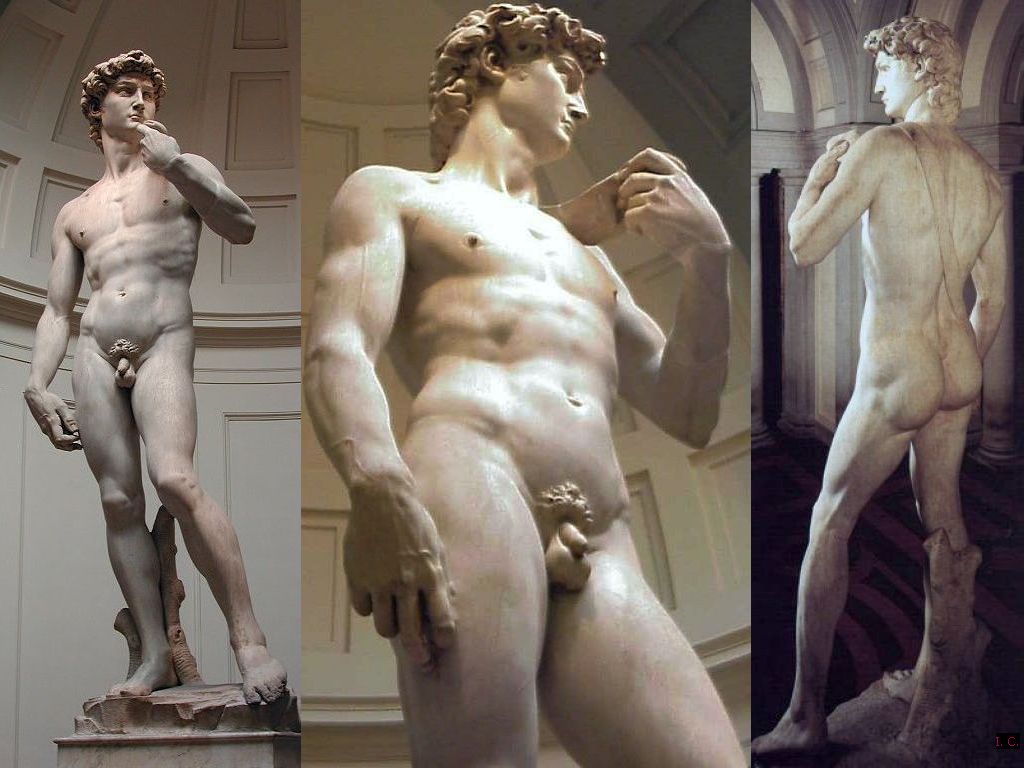
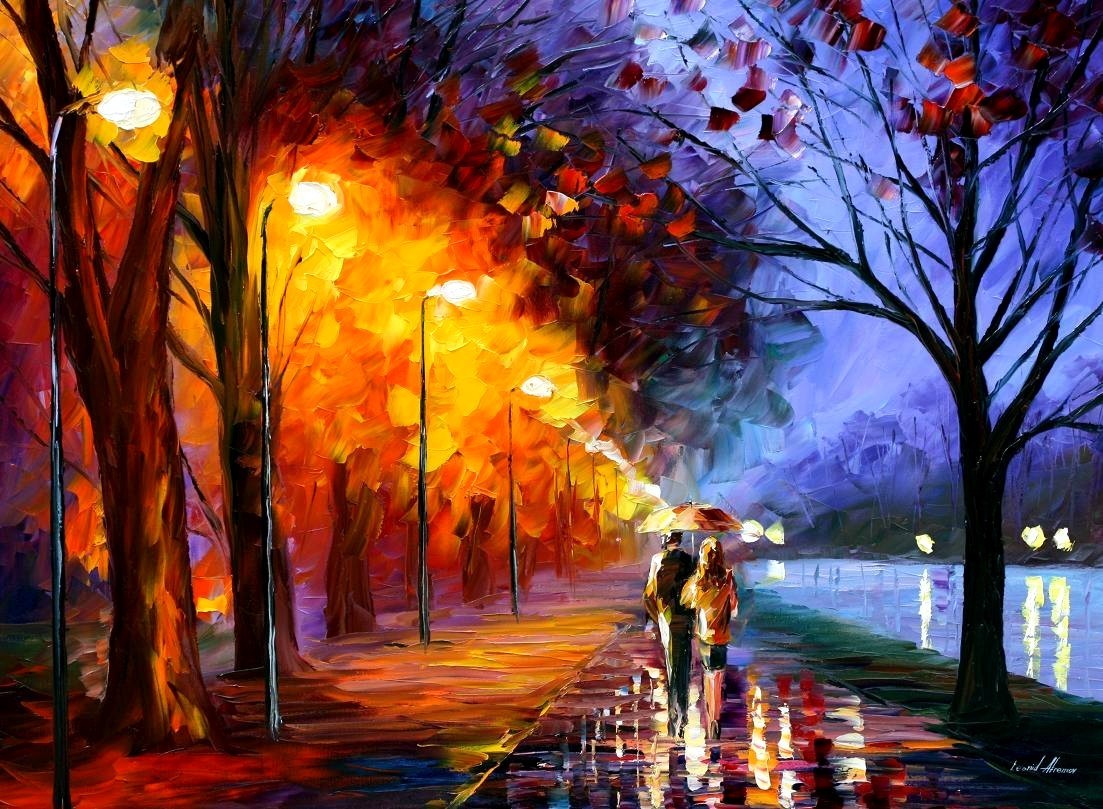
Art as media form is a traditional categories of art. It can be presented as a sculpture, painting, drawing, or any art form in the sense of abstract, historical or informative purposes. Usually art as media in the previous time has historical value in the masterpiece.


6. Broadcast Media


Broadcasting is the distribution of audio and video content to a dispersed audience via any audio or visual mass communications medium, but usually one using electromagnetic radiation (radio waves). The receiving parties may include the general public or a relatively large subset thereof. Broadcasting has been used for purposes of private recreation, non-commercial exchange of messages, experimentation, self-training, and emergency communication such as amateur (ham) radio and amateur television (ATV) in addition to commercial purposes like popular radio or TV stations with advertisements.


7. Electronic Media


Broadcast or storage media that take advantage of electronic technology. They may include television, radio, Internet, fax, CD-ROMs, DVD, and any other medium that requires electricity or digital encoding of information. The term 'electronic media' is often used in contrast with print media.


8. Spoken Media


Spoken Media specializes in publicity, marketing and distribution strategy for documentary films.  We can navigate you and your film from rough cut to distribution and beyond. We are marketing strategists. And storytellers. Communicators. Connectors. Listeners. Linkers.​


9. Written Media

Written media is defined as any words, events, message or thoughts written or recorded on a surface. Writing needs to be more explicit, since obscurities and misunderstandings cannot be removed immediately. People feel more committed to what they write because of the potential permanence of the written communication. Self-correction is eliminated through editing in writing. 


10. 


Hypermedia, a term derived from hypertext, extends the notion of the hypertext link to include links among any set of multimedia objects, including sound, motion video, and virtual reality. It can also connote a higher level of user/network interactivity than the interactivity already implicit in hypertext.


References:
http://ezinearticles.com/?What-is-Digital-Media&id=2864414
http://www.businessdictionary.com/definition/electronic-media.html

Week 1_Task 2_ Media Use in my MIND

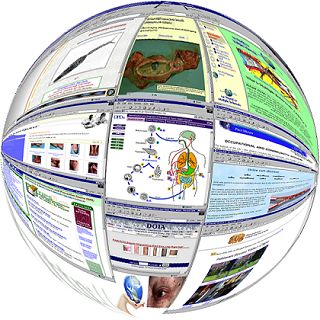
Multimedia is media and content that uses a combination of different content forms. The term can be used as a noun (a medium with multiple content forms) or as an adjective describing a medium as having multiple content forms. The term is used in contrast to media which only use traditional forms of printed or hand-produced material. Multimedia includes a combination of text, audio, still images, animation, video, and interactivity content forms.

    Multimedia is usually recorded and played, displayed or accessed by information content processing devices, such as computerized and electronic devices, but can also be part of a live performance. Multimedia (as an adjective) also describes electronic media devices used to store and experience multimedia content. Multimedia is distinguished from mixed media in fine; by including audio, for example, it has a broader scope. The term "rich media" is synonymous for interactive multimedia. Hypermedia can be considered one particular multimedia application.

    There are different types of Multimedia. Multimedia marketing is a marketing draw near with the aim of uses media other than the in black and white word to communicate a marketing message. Examples of multimedia formats include audio, capture on tape, and the function of photography or sideshows. Multimedia could be deployed in a variety of ways as well as both off-line and online. With the growth of the Internet, the function of multimedia as a marketing vehicle will go on with to grow by the side of an arithmetical rate. The record extensions commonly used to lay up multimedia documentation: MOV, MP4, FLV, M4A, 3GP, TORRENT, WMV, etc.

    Besides that, multimedia finds its application in various areas including, advertisements, art, education, entertainment, engineering, and scientific research. Multimedia is heavily used in the entertainment industry, especially to develop special effects in movies and animations. Multimedia games are a popular pastime and are software programs available either as CD-ROMs or online. Some video games also use multimedia features. In the Arts, there are multimedia artists, whose minds are able to blend techniques using different media that in some way incorporates interaction with the viewer. In Education, they are useful for recorded or broadcast lectures, bringing in an expert speaker from a distant location, demonstrating processes that learners may not otherwise have the opportunity to see (such as a rare surgical technique), demonstrating techniques that learners will have to try themselves later (such as setting up laboratory equipment), recording students' performances to enable feedback and promote reflection, bringing the real world into the classroom. Multimedia is used to produce computer-based training courses and reference books like encyclopaedia and almanacs. Edutainment is an informal term used to describe combining education with entertainment, especially multimedia entertainment. Besides that, Software engineers may use multimedia in Computer Simulations for anything from entertainment to training such as military or industrial training. Multimedia for software interfaces are often done as collaboration between creative professionals and software engineers.

    In the Industrial sector, multimedia is used as a way to help present information to shareholders, superiors and co-workers. Multimedia is also helpful for providing employee training, advertising and selling products all over the world via virtually unlimited web-based technologies. In Medicine, doctors can get trained by looking at a virtual surgery or they can simulate how the human body is affected by diseases spread by viruses and bacteria and then develop techniques to prevent it.

    Why use multimedia? Nowadays, video, audio and multimedia offer powerful means of communication. They are very good for showing what things look like, how they move and how they change, keeping an audience's interest, establishing personal contact, establishing the identity and academic credibility of a speaker, communicating the speaker's enthusiasm for the subject. Moving pictures are excellent for showing how things change or how something is done, for establishing a context for information (such as a landscape or a working environment) to make it easier for an audience to relate to what you are saying.

Wednesday, 7 November 2012

Introducing Myself_Me_Samuel Ku

NAME               :  Ku Yeong Lun, Samuel
ID                     :  1102701981
E-MAIL             :  samuelku89@hotmail.com
HOMETOWN      :  Ampang, Selangor
SCHOOL            :  Multimedia University
COURSE            :  Faculty of Creative Multimedia
YEAR                :  Gamma
HOBBY              :  Dancing / Swimming

Wednesday, 31 October 2012

Week 1_Task 1_ Definition Explore

These are some of the meanings that regrading to Media Anthropology Terms:

1. Cross-Disciplinary Studies- A study
that explains elements of one discipline in terms of another. 


2. Inter-Disciplinary Studies- A studies that incorporates concepts from multiple disciplines to form a more coherent research.
 It is a process of answering a broad question by a single academic major or profession answer.


3. Transdisciplinary- It has the strategy to cross many disciplinary boundaries to create a newer, more holistic approach, and form a new knowledge. It pertaining to or involving more than one discipline.


4. Qualitative research- A method of inquiry to investig
ate the social sciences to further understand the human behaviour and why and how behind them. It's also a method of advertising research that emphasizes the quality of meaning in consumer perceptions and attitudes.


5. Ethnographic research- Ethnography means "portrait of a people." It's a type of qualitative research aimed to study the cultural influence on human behaviour. This social science research method, closely associated with the fields of anthropology and sociology, though not exclusive to them, provides a detailed description of a culture from the viewpoint of a researcher who brings both inside and outside perspectives.


References:

http://en.wikipedia.org/wiki/Disciplinary
http://www.waldenu.edu/Degree-Programs/Bachelors/33102.htm
http://dictionary.reference.com/browse/transdisciplinary
http://wagner.nyu.edu/leadership/publications/files/Qualitative_Research.pdf
http://www.adup.com/new/adup_ad_defs.html
http://www.ehow.com/facts_5519812_meaning-ethnographic-studies.html